Asro
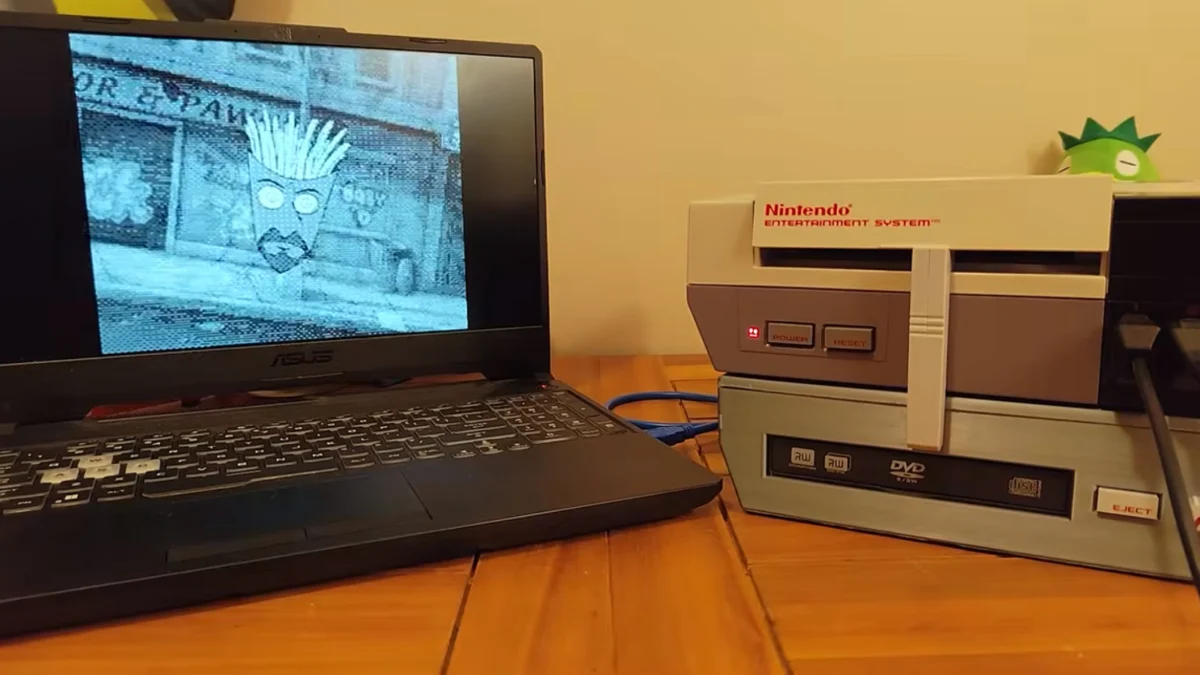
In the pantheon of gaming history, few devices hold the cultural gravity of the Nintendo Entertainment System (NES). Released in North America in 1985, the 8-bit machine saved the video game industry from the crash of 1983 and introduced the world to icons like Mario and Link. Now, nearly four decades later, a YouTuber known as Throaty Mumbo has achieved the impossible: transforming this vintage console into a fully operational, multitasking desktop computer.
Dubbed the "NESPC," this project represents a masterclass in retro-engineering. The device is not merely a cosmetic shell; it functions as a legitimate workstation, complete with a keyboard, mouse support, a graphical desktop environment, web browsing capabilities, media playback, and—inevitably—the ability to run the seminal 1993 first-person shooter, Doom.
The Genesis of the NESPC
The project began as a whimsical challenge. In a sprawling 55-minute documentary-style video, Mumbo confessed to a sense of "gaming fatigue," noting that he was tired of modern, bloated software experiences. His goal was to strip back the digital world to its essentials, reimagining the NES not as a console, but as the "Family Computer" (Famicom) it was always destined to be.
The irony is not lost on the retro-computing community. The original Japanese name for the console, Famicom, was an abbreviation of "Family Computer." By turning the hardware into a functional PC, Mumbo has effectively brought the console’s nomenclature full circle, fulfilling a promise that the hardware architects at Nintendo likely never envisioned for the 6502-based architecture.
A Chronology of Technical Hurdles
The journey to the NESPC was far from linear. Mumbo’s initial attempts were characterized by the "trial and error" philosophy inherent in hardware hacking.
Phase 1: The Failed Boots
Mumbo first attempted to run a bootleg version of Windows 98. Predictably, the 8-bit hardware, which was designed to push simple sprites and tiles, buckled under the weight of a graphical operating system. The result was a stuttering, non-functional mess that served as a reminder of the massive hardware gap between 1985 and the late 90s. He followed this with a Linux-based emulator, which, while more stable, suffered from agonizingly slow performance, rendering it effectively useless for daily tasks.
Phase 2: The EverDrive Breakthrough
The turning point came when Mumbo shifted his strategy toward the EverDrive N8 Pro cartridge. By utilizing the cartridge’s onboard Field Programmable Gate Array (FPGA), Mumbo was able to offload the heavy computational lifting. The FPGA essentially acts as a hardware-level accelerator, allowing the NES to handle x86-adjacent tasks without relying solely on the aging Ricoh 2A03 CPU. This provided the necessary "horsepower" to support a custom-built desktop environment.
Phase 3: Peripherals and Polish
Once the core computing environment was established, Mumbo turned his attention to modernizing the interface. He engineered a custom USB adapter, allowing for standard HID (Human Interface Device) input. This enabled the use of modern keyboards and mice, and even a MIDI keyboard for music production. By the end of the development phase, the NESPC featured a functional Start menu, a robust file manager, a digital trash bin, and the quintessential Windows-era pastime: Minesweeper.
Supporting Data: Pushing the Limits of 8-Bit Hardware
The technical specifications of the NESPC are a testament to the ingenuity of the homebrew community. The system supports:

- Media Playback: Using his previous "NESCD" accessory, Mumbo enabled CD and DVD playback. While the video output is limited to the NES’s palette and resolution—resulting in a "crunchy" black-and-white aesthetic—the device successfully decodes and displays video files.
- Networking: Through specialized hardware interfaces, the NES can now access the internet. Mumbo demonstrated the console browsing Wikipedia and YouTube. While the frame rate is far from fluid, the ability of a 1985 console to perform a TLS handshake and render web content is a significant technical milestone.
- Emulation: Beyond its PC functions, the system serves as a multi-platform emulator, capable of running Game Boy software, including the Pokémon series, directly on the original NES hardware.
The Doom Factor: A Benchmark for Modern Hardware
Perhaps the most culturally significant achievement of the project is the successful port of Doom. In the world of tech-tinkering, "Will it run Doom?" has become the unofficial benchmark for determining if a device is truly a computer.
Mumbo’s implementation of Doom on the NES is not a video stream; it is a native execution of the game code, supported by the hardware acceleration provided by the EverDrive cartridge. While the visuals exhibit the expected glitchiness and frame-rate drops inherent in forcing 3D rendering on 8-bit hardware, the game is entirely playable. It joins an elite list of "unlikely" platforms that have successfully hosted id Software’s masterpiece, including ATMs, pregnancy tests, and, as of August 2026, Canon DSLR cameras.
Implications for Retro-Computing and Sustainability
The NESPC project has profound implications for the preservation and evolution of vintage hardware. By creating an open-source framework for these modifications—Mumbo has made the project files available on GitHub—he is encouraging a new wave of "cyber-archaeology."
Bridging the Generation Gap
The project highlights a growing trend among tech enthusiasts: the rejection of modern "black box" computing. By stripping away the bloatware of modern Windows or macOS and working within the rigid, transparent constraints of 8-bit architecture, users are gaining a deeper understanding of how computers actually function at the silicon level.
The Longevity of Iconic Hardware
Critics of such projects often label them "impractical." Mumbo himself admitted that the NESPC is "very strange and impractical, but definitely very neat." However, the value of the NESPC is not in its utility as a primary workstation, but in its existence as a proof of concept. It proves that with enough creativity and supplemental hardware, the legacy of the 1980s can be extended well into the 2030s and beyond.
The project also sits in a broader context of hardware reclamation. It follows recent viral successes, such as the reconstruction of childhood gaming PCs that still hold the digital "artifacts" of their previous owners—homework files, save states, and forgotten cheats. These projects suggest that we are entering an era where users are less concerned with "upgrading" to the latest silicon and more interested in "re-purposing" the foundational tech that defined the digital age.
Conclusion: The Future of the Past
As the NESPC demonstrates, Nintendo’s oldest home console still possesses a latent potential that few imagined possible. By successfully integrating modern connectivity, peripheral support, and advanced software like Doom into the iconic grey chassis, Throaty Mumbo has done more than just build a computer; he has created a bridge between the infancy of home gaming and the maturity of modern computing.
For the hobbyist, the NESPC is an invitation. By visiting the project’s GitHub repository, anyone with a soldering iron, an EverDrive, and a surplus of patience can attempt to breathe new life into their own childhood console. In a world of planned obsolescence, the NESPC stands as a defiant, albeit slightly glitchy, monument to the idea that nothing truly has to end—it just needs a bit of creative intervention.


 Basiran

 Siti Muinah

 Ali Ikhwan

 Reynand Wu

 Muslim

 Neng Nana