
 Neng Nana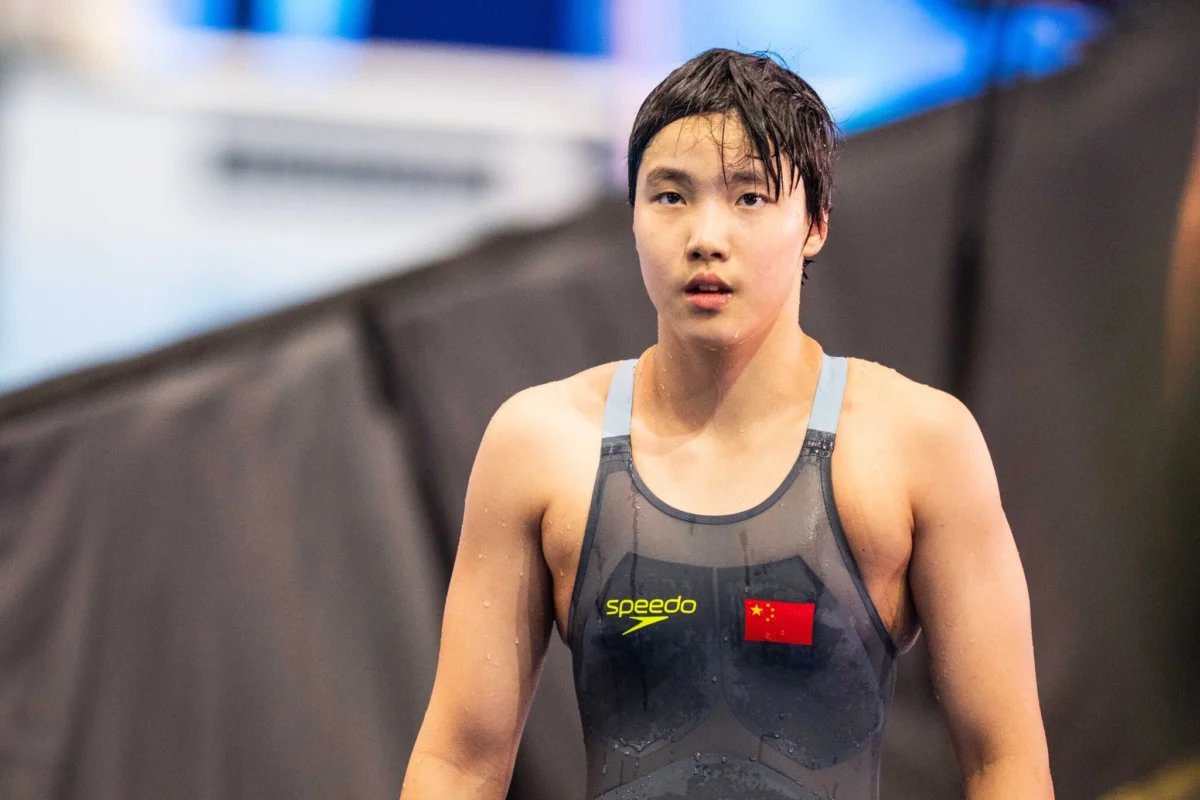
TOKYO, JAPAN – In the annals of swimming history, there are performances that define an era, and then there are performances that redefine the limits of human potential. On Monday, inside the electric atmosphere of the Tokyo Aquatics Centre at the 2026 Asian Games, 13-year-old Chinese prodigy Yu Zidi delivered a swim that defied logic, age, and expectation.
Clocking a blistering 2:06.10 in the women’s 200-meter individual medley, Yu did more than just secure a gold medal; she etched her name into the record books as the owner of a new Chinese record, an Asian record, and a World Junior record. Her performance, now the second-fastest in the history of the event, has sent shockwaves through the global swimming community, signaling the arrival of a generational talent whose trajectory seems limited only by the boundaries of the pool itself.
The Race: A Masterclass in Pacing and Power
The 200 IM is often described as the "ultimate test" of a swimmer’s versatility, requiring a seamless blend of explosive speed and aerobic endurance across all four strokes. As the field stepped onto the blocks, the anticipation was palpable. The reigning Asian Games record-holder, Yu Yiting, lined up as the favorite, looking to defend her crown.
However, from the opening butterfly leg, it was clear that the younger Yu had come to claim the throne. Touching the wall at the 50-meter mark in 26.91, Yu Zidi set an aggressive tempo that outpaced even the established world record pacing of Summer McIntosh. While her backstroke split of 31.96 showed a slight deficit compared to the technical precision of the elite international standard, she more than compensated with a devastatingly efficient breaststroke leg (37.04).
As she transitioned into the freestyle, the crowd rose to its feet. Yu maintained her composure, closing in 30.19 to touch the wall in 2:06.10. Her teammate, Yu Yiting, took silver, finishing in a highly respectable time that nonetheless underscored the sheer magnitude of the teenage winner’s performance.
A Chronology of Meteoric Rise
To understand the weight of Monday’s performance, one must look at the rapid ascent of a girl who was born after the 2012 London Olympics. Yu Zidi’s trajectory is not one of gradual improvement, but of sudden, vertical leaps.
- 2025 World Championships: At just 12 years old, Yu Zidi made her international breakout. She became the youngest swimmer in the history of the sport to qualify for an A-Final and secure a medal at the World Championships. Her fourth-place finishes in the 200 IM, 400 IM, and 200 fly were only overshadowed by her bronze-medal contribution to China’s 800-meter freestyle relay.
- Early 2026 Season: Building on the momentum from her debut, Yu refined her technique, focusing specifically on the transition between strokes—a common point of failure for young swimmers.
- The 2026 Asian Games (Opening Days): Before her record-breaking IM, Yu claimed gold in the 200-meter butterfly, setting a new Asian Games record of 2:05.08. This victory served as a precursor to her dominant performance in the medley.
- The Milestone (September 21, 2026): By clocking a 2:06.10, she officially eclipsed Summer McIntosh’s 2024 World Junior Record (2:06.56), set during the Olympic Games.
Comparative Analysis: The Data Behind the Speed
The statistics provided by the race results offer a fascinating look at the technical evolution of the 200 IM. When comparing Yu Zidi’s splits against those of the former Asian record-holder (Yu Yiting) and the current World Record holder (Summer McIntosh), a clear picture emerges of where the future of the sport is heading.
| Stroke | Yu Yiting (Prior Asian Rec) | Yu Zidi (New Asian Rec) | Summer McIntosh (World Rec) |
|---|---|---|---|
| Butterfly | 27.25 | 26.91 | 27.19 |
| Backstroke | 32.12 | 31.96 | 30.80 |
| Breaststroke | 36.98 | 37.04 | 37.76 |
| Freestyle | 30.47 | 30.19 | 29.95 |
| TOTAL | 2:06.82 | 2:06.10 | 2:05.70 |
The data reveals that while Yu Zidi is already faster than the world record holder in the butterfly and breaststroke legs, her backstroke remains the primary area for growth. If she can bridge the gap in backstroke technical efficiency—where she currently trails McIntosh by over a second—she is on a direct path to challenging the elusive world record of 2:05.70.
Official Responses and Post-Race Humility
In the moments following her victory, the international media scrambled for a comment from the teenager. Despite the gravity of her achievement, Yu maintained a composure that belied her age.
"I wasn’t expecting to go that fast," she told reporters in the mixed zone, her voice steady and calm. When pressed about the pressure of the moment and the intense spotlight of the Asian Games, she shrugged off the notion of nervousness. "I didn’t focus on the crowd or the records. I just focused on the details. I focused on what I needed to do in each lane."
The swimming world, however, is not as calm. Coaches and analysts have been quick to praise the tactical intelligence displayed by a 13-year-old. Her decision to go out fast in the butterfly—a deliberate tactical choice to force the pace—shows a maturity that suggests she is already operating with the mind of a veteran.
Implications for the Global Stage
The ripple effects of Yu Zidi’s performance are significant. With her 14th birthday approaching on October 16, 2026, the global swimming hierarchy is forced to adjust its long-term projections.
1. The Challenge to the World Record
The 200 IM world record has long been considered one of the toughest benchmarks in women’s swimming. With Yu Zidi now sitting just 0.40 seconds off the mark, the race to break the 2:05 barrier has officially begun. The rivalry between the established stars of the Western world and the rising Chinese youth movement will undoubtedly define the next Olympic cycle.
2. A Shift in Technical Training
Yu’s ability to dominate the breaststroke portion of the IM—a segment usually dictated by raw power rather than pure aerobic fitness—suggests that Chinese training programs have successfully integrated high-level power development into their young athletes’ routines without sacrificing the endurance needed for the back-half of the race.
3. The "Youngest Ever" Narrative
While young champions are not unprecedented in swimming, the consistency with which Yu Zidi is producing elite times is rare. By reaching this level at 13, she has effectively extended the potential window of elite performance for her cohort. If she follows the trajectory of previous legends, the world may be witnessing the beginning of a five-to-ten-year reign of dominance.
Conclusion
As the Asian Games in Tokyo continue, all eyes remain fixed on lane four. Whether Yu Zidi continues to push for the world record or settles into the rhythm of the competition, she has already achieved the impossible. She has turned the 200 IM into a spectacle of the future, a reminder that in the world of competitive swimming, age is merely a number, and records are simply markers waiting to be passed.
For now, the swimming world can only watch, analyze, and marvel. A new star has been lit, and she is burning brighter than anyone could have anticipated. The 2026 Asian Games will be remembered as the moment the world met the girl who swam faster than time itself.

 Ammar Sabilarrohman
 Nana
Nana
 Iffa Jayyana
 Ali Ikhwan
 Jia Lissa


 Dwi Wanna