
 Evan Lee Salim
November 25, 2026 — For the uninitiated, skiing is an idyllic dance down snow-dusted mountains, a fluid exercise in gravity, technique, and alpine splendor. But for a select, suffering subset of the ski community, the sport is something entirely different: a psychological and physical endurance test dictated by inches of unforgiving, rigid plastic.
This is the chronicle of a years-long, cross-continental odyssey. It is a first-person account of a skier driven to the absolute brink by chronic foot pain, visiting bootfitters in seven states and two countries, consulting an orthopedist, three acupuncturists, two physical therapists, and ultimately tracking down anonymous specialists operating out of residential garages. It is a humorous yet harrowing look at what hard-to-fit feet can drive a person to do—and a testament to the fact that finding the right bootfitter can fundamentally change a life.
Main Facts: The Anatomy of a Ski Boot Crisis
At the core of the multi-billion-dollar snowsports industry lies a fundamental paradox: ski boots are engineered to lock the foot into an immobile, highly compressed position to maximize edge control and power transfer. For skiers with "normal" anatomy, this is merely uncomfortable. For those plagued by bone spurs, high insteps, abnormally wide forefoots, or low-volume heels, it is a form of medieval torture.
The financial and logistical toll of this pursuit is staggering. Beyond the baseline cost of gear—ranging from $600 to upwards of $1,500 per pair—hard-to-fit skiers routinely burn through hundreds of dollars in aftermarket liners (such as Intuitions and ZipFits), custom orthotics, specialized punch tools, and countless hours of professional labor.
When standard retail solutions fail, the problem ceases to be a gear issue and becomes an existential crisis. As millions of skiers head to the slopes each season, a quiet underground economy of independent bootfitters, podiatrists, and rogue garage-craftsmen operates behind the scenes, attempting to salvage ruined ski vacations and prevent lifelong enthusiasts from hanging up their gear for good.
Chronology: Seven Desperate Steps on the Road to Recovery
My personal descent into madness began innocently enough, but quickly escalated into an obsessive, multi-year crusade. Here is the chronological breakdown of the lengths I went to in order to find relief.
1. The Awakening: Embracing the Hand-Me-Down Trap
From ages two through 22, every pair of ski boots I wore was a hand-me-down from my older brothers—oversized, packed-out relics of a bygone era. The paradigm shifted when I started working in the ski industry. While skiing around Big Sky during a media event, a kind representative from Nordica spotted my decade-old, size 26.5 monstrosities and shook his head.
He invited me to the Nordica headquarters in New Hampshire, measured my feet, and set me up in a proper 25.5 Nordica Promachine. Suddenly, I understood what skiing was supposed to feel like: an aggressive stance, real resistance in the shins, and precise power transfer. It was a brief, blissful honeymoon phase, abruptly cut short by a wicked case of tendonitis in my ankles and shins.
2. Bringing Ski Boots to the Emergency Room
After two consecutive seasons of excruciating, day-ending pain, I booked an appointment with an orthopedic foot and ankle specialist. Convinced my boots were fracturing my bones, I lugged a massive duffel bag containing both my alpine and touring boots into a sterile medical practice and hauled them out for show-and-tell.
The physician kindly assured me that while he understood what ski boots were, my structural issues were mechanical, not medical. I was instructed to pack up my plastic instruments of torture and take them back where they belonged.
3. The Santa Fe Shuffle: Annoying the Local Shop
Desperate for a structural fix, I visited Santa Fe’s singular dedicated ski shop. The owner sized me down into the stiffest 24.5 available—a 110-flex Fischer. It felt like standing in a vise-grip filled with ice water; I lost all feeling in my feet on the first run.
Mercifully, he allowed a return. This highlighted the immutable bootfitter’s dilemma: boots large enough to prevent nerve damage caused tendonitis, while boots small enough to stop tendonitis induced bunions and nerve compression. I graduated to Taos Bootdoctors, bringing six-packs of beer, offering bribes, and politely begging the staff for millimeter-by-millimeter shell punches. Despite their heroic patience, the pain persisted.
4. Mid-Tour Emancipations in the Backcountry
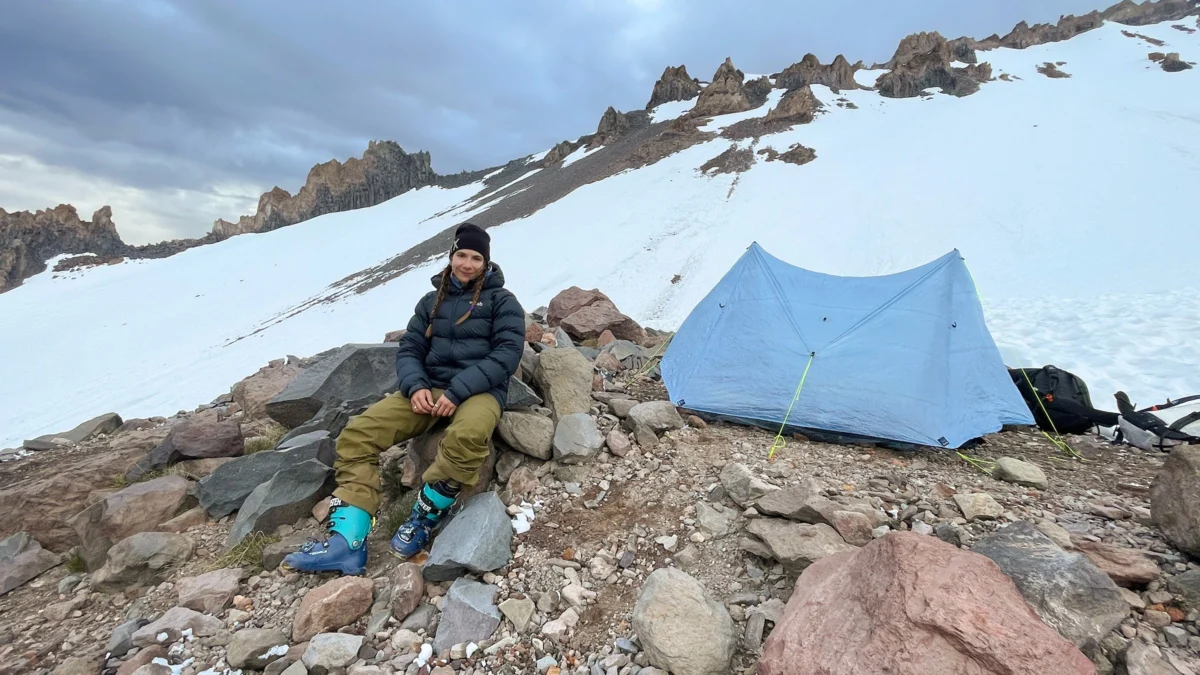
As winter progressed, I stared down the barrel of a multi-day backcountry hut trip with mounting dread. While minor outings were manageable, a week of dawn-to-dusk touring required extreme measures. Knowing anti-inflammatories and bunion pads were powerless against rigid plastic, I instituted mandatory "boots-off breaks" deep in the mountains. Amidst freezing alpine landscapes, I would carefully peel off my socks, prop my battered feet on a backpack in the snow, and experience moments of sweet, profoundly stupid relief while my touring partners took extra laps.
5. The Seattle Garage Oracle
Chasing a whispered rumor in the Pacific Northwest, I sought out a legendary fitter in Seattle who operated out of his residential garage and specialized in modifying plug boots for competitive ski racers. Bringing him two stubborn pairs of boots, I found a master craftsman. He listened patiently, deployed diagnostic devices I had never seen, and completely overhauled the geometry of both pairs overnight. For a golden window of time, I skied 12-hour backcountry missions in absolute comfort. Then, predictably, he retired.
6. The Credit Card Cascade and the Return of the Tecnicas
When my trusty backcountry boots finally packed out beyond salvation, I entered a multi-state retail frenzy. I tried on every single touring boot on the market, ordered a dozen pairs online, and temporarily accumulated a terrifying credit card balance. Like an estranged lover returning to a toxic relationship, I ultimately crawled back to my old, battered Tecnicas with no backup plan.
7. Structural Catastrophe at Rogers Pass
The end of the road for my old gear arrived dramatically during a trip to Rogers Pass, British Columbia. On day three, the upper cuff of my aging touring boot snapped completely clean off the lower shell. Stranded a few hundred yards from the truck, I spent the remainder of the trip sitting at the trailhead. Back in New Mexico, I was officially back at square one: two pairs of broken, ill-fitting boots, zero patience, and no bootfitter in sight.
Supporting Data: The Science of Foot Geometry
To understand why custom bootfitting is an art form rather than a simple retail transaction, one must examine the variance in human foot morphology. According to industry data compiled by organizations like Masterfit University:
- Over 70% of recreational skiers wear boots that are either too large (to compensate for width issues) or improperly contoured, leading to premature fatigue and decreased control.
- The average human foot expands and shifts under load by up to a full size during athletic exertion, a variable that off-the-shelf plastic shells fail to accommodate.
- Custom footbeds and shell modifications account for an estimated 85% of resolved chronic foot pain cases in specialized ski shops, proving that the problem is rarely the foot—it is the interface between foot and boot.
Official Responses and Industry Perspectives
Major ski boot manufacturers are acutely aware of the friction between mass-production sizing and unique human anatomy. In recent years, brands have heavily invested in heat-moldable Caselli shells (such as Fischer’s Vacuum technology and Atomic’s Memory Fit) designed to bridge the gap between custom plug boots and retail inventory.
"The industry has made massive strides in shell malleability," notes a senior product developer for a major alpine brand who requested anonymity. "We can expand shells up to six millimeters in key areas out of the box. However, no factory thermo-molding process replaces an experienced bootfitter with a grinding wheel, a stretch press, and an intimate understanding of biomechanics. Mass production gives you a baseline; human expertise gives you comfort."
Independent retailers echo this sentiment, emphasizing that the modern consumer often underestimates the labor required to achieve a true, customized fit. "People will spend $1,000 on skis without blinking, but balk at paying $150 for custom footbeds and alignment work," says a veteran Masterfit-certified bootfitter in Colorado. "Your boots are the only direct connection to your skis. If that interface fails, the best skis in the world won’t save you."
Implications: Hope for the Hard-to-Fit Skier
Is there light at the end of the tunnel for skiers ready to abandon the sport over chronic foot agony?
The journey ultimately reached its conclusion when I discovered that even elite professional skiers—individuals who make a living gliding down vertical ice faces—frequently contemplate quitting due to boot pain. One such peer pointed me toward yet another fit-obsessed industry veteran operating out of a home workshop in western Washington.
Upon visiting him, the ritual repeated: he listened, evaluated, and methodically ground and expanded the forefoots of my boots into a generous, accommodating shape. Stepping into them for a test run brought an immediate, profound sigh of relief.
For the vast demographic of skiers plagued by high insteps, stubborn bone spurs, and extra-wide forefoots, the takeaway is clear: do not suffer in silence, and do not accept retail compromises. Solving chronic boot pain requires a combination of persistence, financial investment, and, above all, locating a practitioner who approaches foot mechanics like a mad scientist.
Just make sure to get their phone number—and pray they never decide to retire.

 Asep Darmawan
 Lina Irawan

 Azzam Bilal Chamdy

 Neng Nana
 Siti Muinah

 Asro