
 Raul Delapena Setiawan
By [Your Name/Journalistic Desk]
October 30, 2026
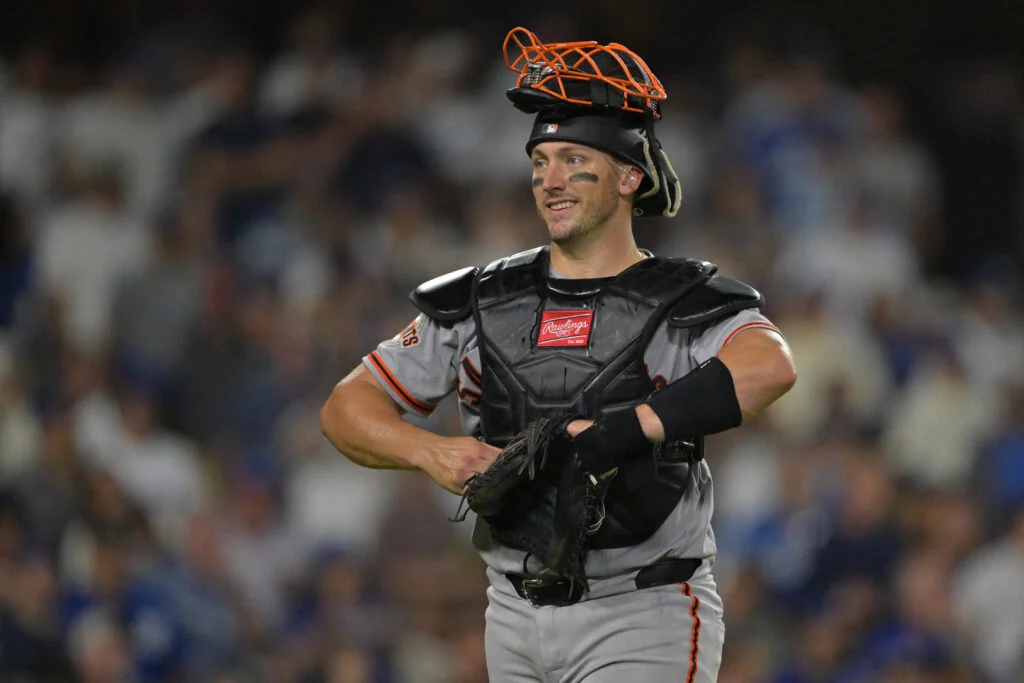
The San Francisco Giants’ roster construction entered a period of transition this afternoon as the club officially announced that veteran catcher Andrew Knizner has cleared waivers. Following the designation for assignment, Knizner has been sent outright to the organization’s Triple-A affiliate, the Sacramento River Cats.
While the administrative move places him within the minor league system, the reality of the transaction suggests a much more immediate departure. Under Major League Baseball’s collective bargaining agreement, Knizner holds the right to refuse the assignment in favor of electing free agency—a path he is widely expected to pursue as he seeks a clear path to a big-league roster for the 2027 season.
The Chronology: A Season of Uncertainty
To understand how Knizner arrived at this juncture, one must look at the turbulent trajectory of the 2026 Giants’ catching corps. The organization entered the year looking for veteran stability to complement their younger assets, hoping that Knizner’s experience behind the plate would serve as a stabilizing force in a pitching-heavy clubhouse.
Throughout the 2026 campaign, the Giants’ front office remained aggressive in their pursuit of roster depth, leading to a crowded room of backstops. Knizner, who has spent his career as a reliable, if not spectacular, defensive presence, found himself squeezed by both performance fluctuations and the strategic prioritization of younger, higher-upside prospects within the organization’s farm system.
The sequence of events leading to today’s announcement unfolded rapidly over the last 72 hours. After the Giants made a series of end-of-season roster adjustments to protect players from the Rule 5 Draft and accommodate impending free-agent signings, the team found itself in a crunch regarding the 40-man roster. Knizner, being out of minor league options, was the casualty of this mathematical necessity. By designating him for assignment, the Giants sought to clear space, hoping that his contract might be absorbed by a club in need of catching depth. When no other team stepped forward to claim him during the 24-hour waiver window, the organization’s path was set: an outright assignment to Sacramento, which serves as the procedural final step before Knizner inevitably enters the open market.
Supporting Data: The Profile of a Journeyman Catcher
Andrew Knizner’s career has been defined by his resilience and his reputation as a "game-caller." Drafted by the St. Louis Cardinals in 2016, he spent years refining his craft as a backup to future Hall of Famer Yadier Molina. This tutelage instilled in him a defensive discipline that has made him a serviceable target for pitchers across the league.
However, the modern catcher’s value is increasingly tied to offensive output—a struggle that has defined much of Knizner’s recent tenure. Statistically, Knizner’s 2026 performance saw him battling consistency issues at the plate. While his framing metrics remained above the league average, his OPS and slugging percentage fell short of the benchmarks required for a primary starter.
When evaluating catchers of his profile, front offices often look at "WAR per 100 games" and "Defensive Runs Saved." Knizner’s numbers in these categories have remained steady, but his offensive regression created a difficult narrative for the Giants. In an era where the league average for catcher OPS has trended upward, Knizner’s inability to provide a consistent spark in the bottom half of the lineup became a liability that the Giants were eventually unable to ignore, particularly as they look to build a more potent, high-contact lineup for 2027.
Official Responses and Front Office Strategy
The Giants’ organization has remained tight-lipped regarding the specific mechanics of the decision, adhering to a "best-fit" philosophy. In a brief statement issued by the front office, the team thanked Knizner for his professionalism during his stint in San Francisco.
"Andrew is a consummate professional who handled the rigors of the catching position with grace and focus," the statement read. "These decisions are never easy, especially with a player of his character, but we are looking at a roster transition that prioritizes flexibility and long-term depth as we head into the winter meetings."
While there has been no formal comment from Knizner’s representatives, the expectation of him electing free agency is a testament to the standard protocol for veterans with his service time. By refusing the assignment to Triple-A, Knizner essentially declares himself a free agent, allowing him to sign with any of the 30 major league clubs. This is a strategic move: he will likely look for a team that can offer a non-roster invite to Spring Training, giving him the chance to compete for a backup role without the uncertainty of being buried in a Triple-A rotation.
The Implications: What This Means for 2027
The departure of Knizner from the Giants’ active roster creates a significant ripple effect for the team’s upcoming off-season strategy.
1. The Search for Secondary Catching
The Giants are now officially in the market for a backup catcher. The team will likely pursue a veteran who can offer stability during the dog days of summer, allowing the starting catcher to remain fresh. The market for such players is traditionally robust, with teams often signing multiple candidates to minor-league deals in November and December.
2. The Internal Pipeline
The decision to clear Knizner off the 40-man roster also signals confidence in the organization’s internal talent. With several high-ceiling prospects progressing through the minor leagues, the Giants may be looking to integrate a younger, more cost-controlled backup who can grow alongside the starting rotation. This transition marks a shift in the Giants’ organizational philosophy toward a more youth-oriented roster model.
3. The Knizner Market
For Andrew Knizner, the road ahead is one of familiar uncertainty. He enters the free-agent market as a proven commodity. Teams that prioritize veteran leadership in the bullpen and a calm demeanor behind the plate will view him as a prime target. His ability to work with a diverse pitching staff remains his greatest asset, and there is little doubt that his phone will ring as teams begin to evaluate their needs following the World Series.
Conclusion: A Turning Point in San Francisco
The waiver of Andrew Knizner is a microcosm of the cold, clinical reality of professional baseball. It is a sport that balances human relationships against the hard metrics of roster construction and salary caps. For the Giants, the move is a necessary step in the evolution of their franchise. For Knizner, it is an opportunity to redefine his role on a new team.
As the off-season gains momentum, the baseball world will watch closely to see where Knizner lands. His journey—from a heralded prospect in St. Louis to a reliable veteran navigating the waiver wire—is a reminder of the grind that defines the majority of MLB careers. Whether he secures a major league contract or joins a club on a minor league invite, his experience will be an asset to any organization looking for a steady hand in a volatile position.
For the Giants, the work is far from over. With a vacancy now open on the 40-man roster and a need to bolster their depth, the front office is likely already engaged in the preliminary conversations that will shape the team’s identity for the 2027 season. The departure of Knizner is not the end of the story, but rather a turning of the page.

 Basiran

 Muslim
 Neng Nana

 Jia Lissa

 Asep Darmawan
 Lina Irawan

 Laily UPN